
The Power of the Internal Organs: A Client’s Guide to Visceral Manipulation
When most people think of osteopathy, they picture adjustments to the spine or the « cracking » of joints. However, a profound branch of osteopathy looks deeper—beyond the bones and muscles—to the soft, vital organs of the body. This is Visceral Manipulation (VM). Developed by world-renowned French Osteopath Jean-Pierre Barral, VM is a gentle manual therapy that helps your internal organs (viscera) regain their natural ability to move.
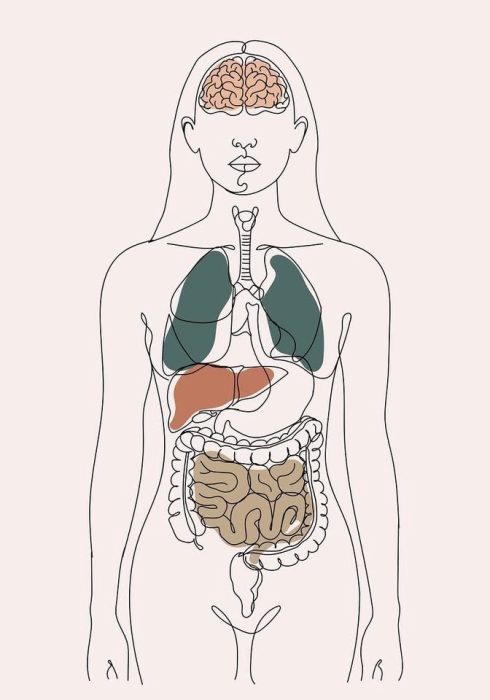
The Legacy of Jean-Pierre Barral
In the 1970s, Jean-Pierre Barral began a revolutionary study of the relationship between the organs and the musculoskeletal system. During his work at a lung disease hospital in Grenoble, France, he noticed during autopsies that the density of the tissues surrounding the organs changed based on the patient’s history of illness or injury. Barral theorized that if an organ cannot move freely, it creates a « line of tension » that ripples outward, affecting the spine, neck, and even the limbs. He formalized his findings in his seminal 1983 book, Visceral Manipulation, followed later by Trauma: An Osteopathic Approach. Today, his work is taught globally through the Barral Institute.
How It Works: The Role of Fascia
To understand VM, you must understand fascia. Think of fascia as a continuous, spider-web-like wrapping that encases every muscle, bone, and organ in your body.
Your organs are not « floating » in your abdomen; they are suspended by ligaments and connective tissues. In a healthy body, these organs slide and glide against one another during every breath and movement. However, when an organ becomes « fixed » due to inflammation, surgery (scar tissue), or emotional stress, the fascia tightens. This pulling can cause distant pain—for example, a restricted liver can pull on the fascia of the right shoulder, causing chronic « rotator cuff » pain that never seems to heal with massage alone.
Impact on the Nervous and Circulatory Systems
Visceral Manipulation doesn’t just move tissue; it communicates with your body’s control centers.
- The Autonomic Nervous System (ANS) Our organs are deeply tied to the ANS, which manages our « Rest and Digest » (parasympathetic) and « Fight or Flight » (sympathetic) states. Constant tension in the gut or chest can keep the body trapped in a state of high stress. By releasing the physical tension around the organs, VM helps « reset » the nervous system, promoting deeper relaxation and better digestive function.
- The Circulatory System
Every organ requires a rich blood supply to function and a drainage system (lymphatics) to remove waste.
- Arterial Flow: VM helps remove mechanical obstructions around arteries, ensuring organs receive oxygenated blood.
- Venous Drainage: By improving the mobility of the diaphragm and the surrounding viscera, VM enhances the « pump » action that moves blood back to the heart.
Why Consider Visceral Manipulation?
Because the body is a single, integrated unit, VM can be effective for a wide range of issues that seem unrelated to the organs, including:
- Chronic Back and Neck Pain: Addressing the « pull » from internal scars.
- Digestive Issues: Bloating, constipation, or acid reflux.
- Post-Surgical Recovery: Breaking up adhesions and internal scar tissue.
- Emotional Well-being: Releasing the physical « gut » tension associated with anxiety.
What to Expect During a Session
Unlike deep tissue massage, VM is often very light. Your osteopath uses precise, gentle pressure to « listen » to the tissues with their hands, encouraging the organ to move back into its natural rhythm. It is a subtle process with often profound, whole-body results.
Key Takeaways
- The Body is a Unified Whole: Visceral Manipulation (VM) is based on the principle that your organs (viscera) must move freely. If an organ is restricted, it can pull on distant muscles and joints, causing chronic pain in areas like the back, neck, or shoulders.
- The « Barral » Influence: Developed by Jean-Pierre Barral in the 1970s, this practice moved osteopathy beyond bones and muscles, proving that internal tissues play a massive role in structural health.
- Fascial Connectivity: Organs are held in place by fascia. When this connective tissue becomes « glued » due to surgery, injury, or inflammation, VM uses gentle manual pressure to restore the natural « glide » between organs.
- Systemic Benefits: Beyond structural relief, VM supports the Autonomic Nervous System (helping you shift out of « fight or flight ») and improves circulation, ensuring organs receive fresh blood and drain toxins efficiently.
Book an appointment in Calgary or Canmore
Frequently Asked Questions (FAQ)
Not at all. While some areas might feel slightly tender or "heavy" if there is significant restriction, the techniques are generally very gentle. Your osteopath uses a light "listening" touch to encourage the body to release tension rather than forcing it.
Many clients feel a sense of "lightness" or improved mobility after the first session. However, for chronic issues or deep-seated scar tissue, a series of 3 to 5 sessions is usually recommended to create lasting change in the fascial layers.
This is the "Barral" philosophy in action! For example, the ligaments of your liver attach near your diaphragm and can refer pain through the phrenic nerve to your right shoulder. By releasing the tension in the liver's fascia, the mechanical pull on your shoulder is eliminated, often providing relief where traditional shoulder massage failed.